Function
Define normal, stopped, faulted, emergency and recovery states, including the commands, permissives, interlocks and indications expected in each state.
A project-intake page that connects Ahilyanagar control-panel searches to the actual load schedule, operating sequence, interfaces, protection context and documentation needed for review.
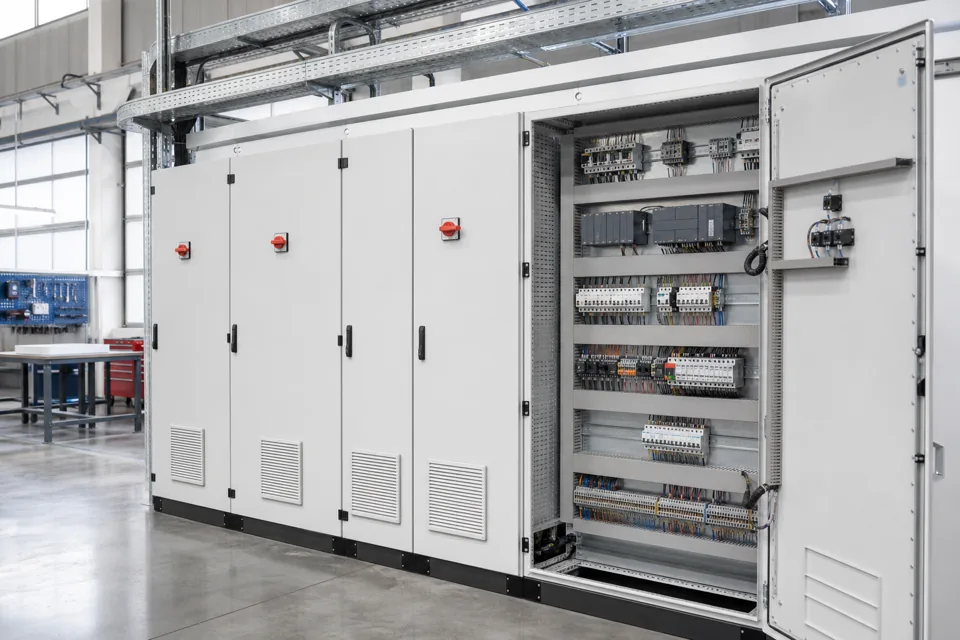
AIE-informed product visualization
These illustrative scenes were generated from management-supplied AIE workshop references. They explain form and workmanship context; they are not project photographs or specification evidence.


Answer first
An electrical control-panel enquiry becomes useful when it defines the function, supply, loads, operating sequence, external interfaces and site conditions. Arnav Industries can review those inputs from its Ahilyanagar base before the assembly architecture or commercial scope is fixed.
The label ‘control panel’ covers many different functions. A machine control assembly, process utility panel and distribution-oriented panel may share devices while requiring very different operating sequences, segregation, protection, documentation and field interfaces. The starting point is therefore the required function, not a generic component list.
For an Ahilyanagar project, the first review can begin with an existing single-line diagram, load list, operating narrative, photographs or even a written requirement. Missing information should be recorded as an engineering action so it does not silently become a rating, interface or commercial assumption.
Decision model
Define normal, stopped, faulted, emergency and recovery states, including the commands, permissives, interlocks and indications expected in each state.
Connect every feeder and controlled load to its supply, current, starting method, duty cycle and operating combinations before establishing the assembly architecture.
Identify field devices, remote systems, network protocols, hardwired signals and responsibility for supply, termination, configuration and functional testing.
Record installation position, ambient conditions, enclosure needs, cable entry, access, available space and the way heat can leave the installed assembly.
A conceptual technical view of the evidence and functional boundary; final project values follow approved engineering.

Final ratings, protection, earthing, settings and interlocks follow approved project engineering.
Open full-size SVGPrepare the review
Begin with whatever is available and label unknowns. A missing input is safer as a visible verification action than as a silent design assumption.
Latest available single-line diagram and the electrical boundary the proposed panel will serve.
Load schedule with rated current or power, duty, starting method and simultaneous operating combinations.
Functional description or sequence covering normal operation, permissives, trips, emergency states and reset behaviour.
Incoming supply, earthing context, upstream protection and available fault information when known.
I/O list, field-device list, communication interfaces and responsibility boundaries with other suppliers.
Enclosure location, ambient conditions, cable-entry direction, installation access and space limitations.
Required drawings, review stages, routine checks, FAT expectations, software handover and delivery scope.
Controlled pathway
Reconcile the operating requirement, available drawings and responsibility boundaries into one reviewable system context.
Identify missing load, fault, sequence, interface or environmental information that can materially change the proposed architecture.
Describe the assembly, control, documentation, testing, delivery and site-support boundaries that can be priced without hidden assumptions.
Final ratings, component selection, protection, wiring, thermal arrangement and interlocks follow the accepted project requirement.
Claim boundary
This page does not establish a panel rating, short-circuit capability, form of separation, ingress-protection level or compliance claim for an unreviewed project.
Installation, field wiring, software, testing and commissioning are included only when they appear in the accepted commercial and technical scope.
Questions
Yes. Send the documents and operating information already available. The first review can identify which missing inputs must be resolved before a configuration or quotation is dependable.
No. It explains the evidence pathway. The supply, loads, sequence, environment, protection and interfaces determine the project-specific assembly.
Yes. Record client-approved makes or plant standards, but include the functional and electrical duty as well because a brand list does not define the engineering requirement.