
Power Quality
Detuned Reactor APFC Panels
Staged reactive-power correction equipment using series reactors where the assessed system calls for a detuned capacitor arrangement.
Request Technical Review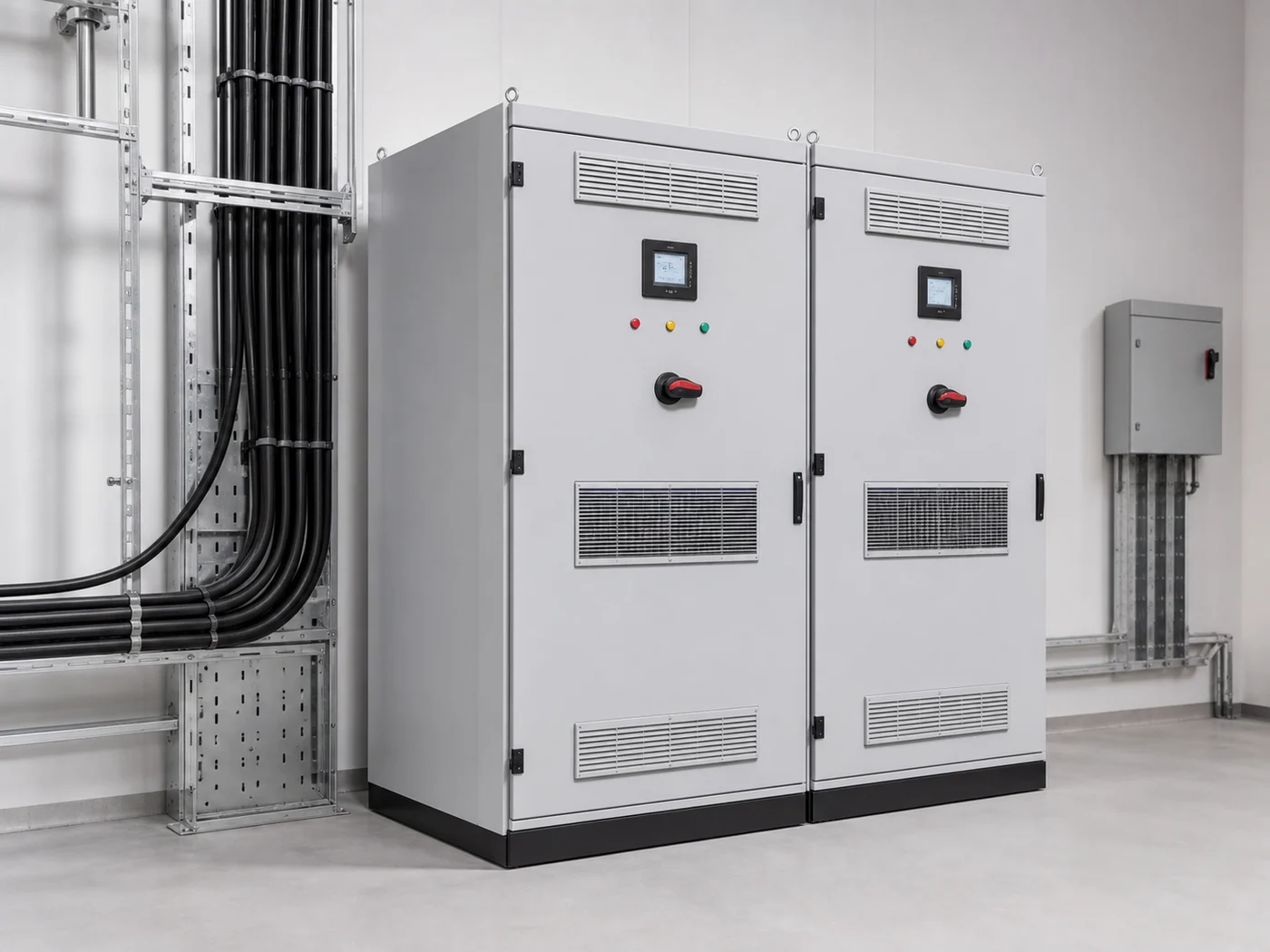
When this solution is considered
- The facility has significant non-linear loads or measurements indicate a harmonic environment relevant to capacitors.
- Existing capacitor stages overheat, fail prematurely or interact unfavorably with the electrical system.
- The project specification or power-quality study calls for detuned correction equipment.
What we need to understand
The useful starting point is the actual electrical system and operating requirement—not a generic rating request.
- 01
Power-quality measurements including voltage and current harmonic information.
- 02
System voltage, frequency, transformer and network impedance details where available.
- 03
Reactive-power requirement, load profile and target power-factor basis.
- 04
Non-linear load inventory and existing capacitor or filter equipment.
- 05
Site temperature, ventilation, enclosure and installation constraints.
Configuration considerations
- Reactor and capacitor selection depends on the assessed system, tuning approach and required reactive-power output.
- Thermal design, switching duty, protection and ventilation are especially relevant to reactor-based stages.
- The panel must be coordinated with existing filters, capacitors and significant non-linear loads.
Typical applications
These examples indicate where the solution may be considered; they do not represent completed Arnav projects.
- Industrial facilities with variable-frequency drives and a measured need for detuned correction.
- Existing APFC systems being redesigned after harmonic or capacitor-performance concerns.
- Projects whose power-quality study or specification explicitly requires reactor-protected stages.
Frequently asked questions
Why are reactors used with capacitor stages?
Series reactors change the capacitor branch response and are applied where the assessed harmonic environment and system design call for a detuned correction arrangement.
Can the detuning approach be chosen without a power-quality study?
The choice should be supported by system and harmonic information. Generic selection can miss network conditions, existing equipment interactions and thermal duty.
Does a detuned APFC panel remove all harmonics?
No. Its primary role is reactive-power correction with a harmonic-aware capacitor arrangement. Separate harmonic mitigation may still be required if measurements and project objectives indicate it.
Share your detuned apfc panels requirement.
Send the information already available. The initial review can identify the remaining inputs needed to define scope.