
Power Quality
Thyristor-Switched APFC Panels
Staged power-factor correction equipment using electronic switching where the load cycle calls for faster response than contactor-based steps.
Request Technical Review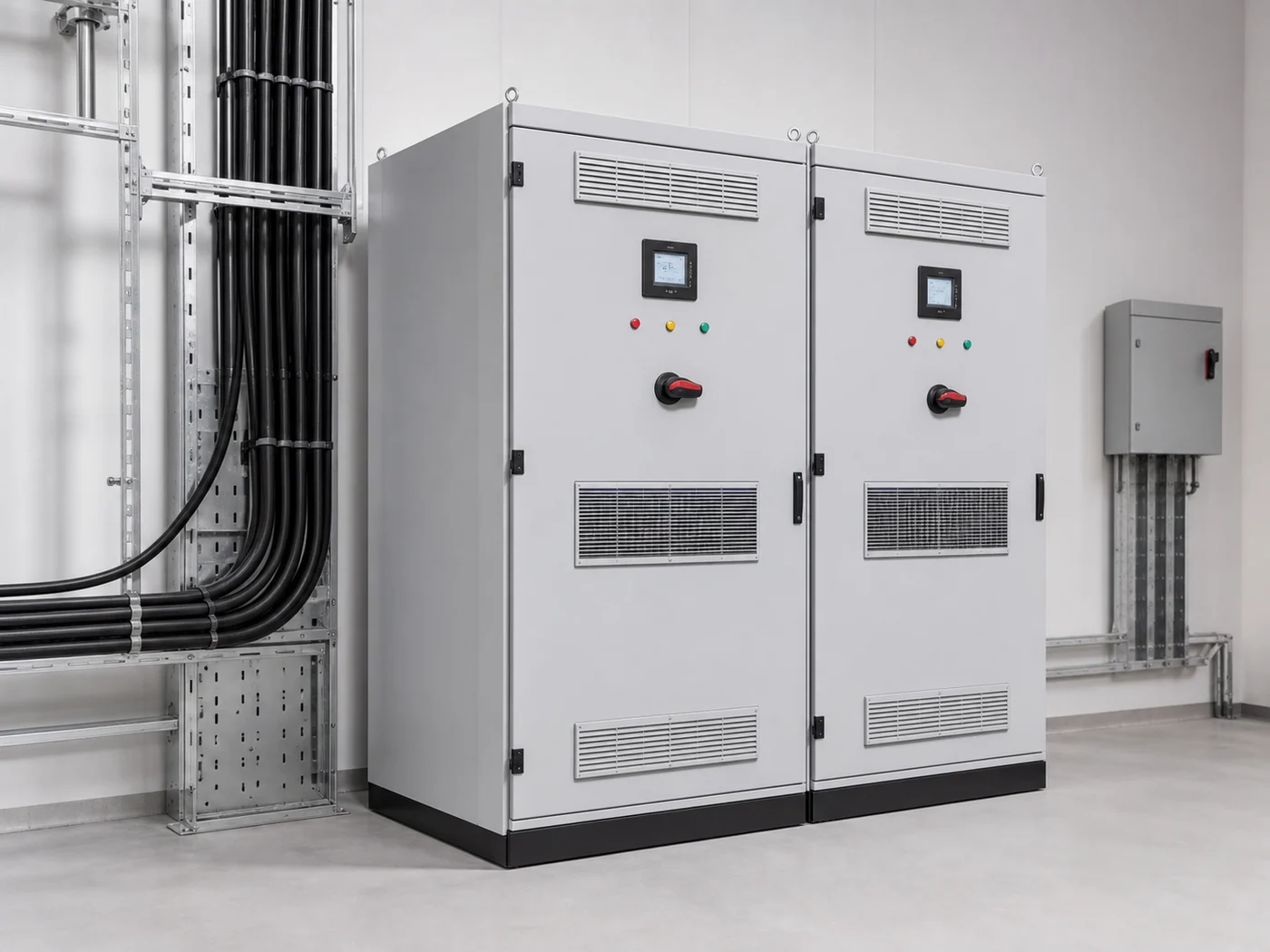
When this solution is considered
- Reactive-power demand changes rapidly during repetitive machine or process cycles.
- Conventional contactor switching cannot follow the required duty without excessive cycling or delay.
- The assessed application needs fast step response but not a continuously controlled SVG approach.
What we need to understand
The useful starting point is the actual electrical system and operating requirement—not a generic rating request.
- 01
Time-based reactive-power and power-factor measurements across fast operating cycles.
- 02
Load switching frequency, duty cycle and process sequence.
- 03
System voltage, frequency, transformer data and single-line diagram.
- 04
Harmonic measurements, non-linear load inventory and existing correction equipment.
- 05
Required response behavior, installation space and thermal conditions.
Configuration considerations
- Step size and switching logic follow the speed and magnitude of reactive-power changes.
- Electronic switching, capacitor duty, reactor needs, cooling and protection are coordinated as one system.
- Current sensing, controller behavior and interaction with existing correction equipment must be defined.
Typical applications
These examples indicate where the solution may be considered; they do not represent completed Arnav projects.
- Welding, pressing, lifting or process loads with fast repetitive operating cycles.
- Industrial lines where reactive-power demand changes more quickly than standard contactor stages can follow.
- Measured applications needing rapid stepped correction within a defined project scope.
Frequently asked questions
When is thyristor switching considered instead of contactors?
It is considered when representative measurements and process duty show that reactive-power steps must change more quickly or frequently than a contactor arrangement can suitably follow.
How is a thyristor-switched APFC panel different from an SVG?
Thyristor equipment switches discrete capacitor stages rapidly, while an SVG provides continuously controlled power-electronic compensation. The load profile determines which approach is appropriate.
What operating data is important for selection?
Time-based reactive-power demand, cycle frequency, step magnitude, harmonics, system parameters, existing correction equipment and thermal conditions are important inputs.
Share your thyristor apfc panels requirement.
Send the information already available. The initial review can identify the remaining inputs needed to define scope.