
Technical-use boundary
Technical information needs a project boundary.
The public website is designed to help people ask better questions. It is not a substitute for measurements, approved engineering, manufacturer data, statutory requirements or competent work on an identified electrical system.
Read technical resourcesFrom public concept to project record
An example information path: actual source, load and protection data must replace the conceptual labels before a design decision is made.
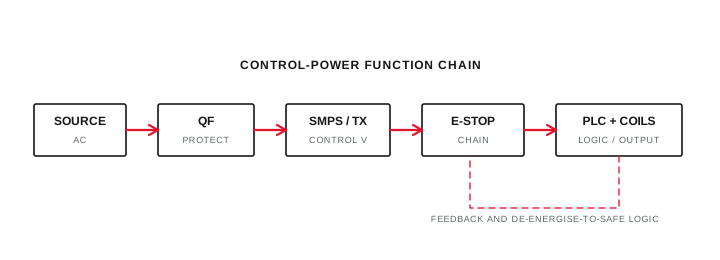
Final ratings, protection, earthing, settings and interlocks follow approved project engineering.
Open full-size SVGUse / do not infer
Read every asset at the level it was issued.
Where a page, diagram, calculation or image carries a more specific note, that note forms part of its public-use boundary.
Catalogue descriptions
Useful for identifying a possible equipment or service family.
Not an accepted selection, rating, bill of material or performance commitment.
Calculations and examples
Useful for understanding variables, relationships and the information an engineer may request.
Not a project calculation unless issued for the identified system and approved scope.
Diagrams and generated media
Useful for explaining a functional idea or showing a representative industrial context.
Not an as-built drawing, client-site photograph, fabrication drawing or proof of supplied equipment unless explicitly identified as such.
Standards and references
Useful for locating the source or topic that informed an article.
Not a statement that every cited edition or clause applies to a particular installation.
Contact and quotation discussions
Useful for recording the available requirement and deciding the next review step.
Not an order acceptance, engineering approval or final scope until documented through the applicable commercial process.
Safety boundary
Electrical work can expose people and equipment to serious harm.
Do not use the public website as an instruction to open, energise, modify, test or operate electrical equipment. Isolation, access, testing, protection, earthing and commissioning decisions must follow the actual installation, applicable requirements and authorised competent personnel.
See how project evidence is framed Read the technical content policyNeed help?
Turn a public topic into a defined engineering question.
Send the system context, measurements, drawings and intended outcome available for the actual application.
Measure before selecting the function
Observed symptoms lead to a defined measurement boundary, an evidence-led function and a verified outcome.

Final ratings, protection, earthing, settings and interlocks follow approved project engineering.
Open full-size SVG