Automation
Industrial Automation & Control Integration
Electrical control and automation integration that connects field equipment, control panels and accepted third-party systems around a documented operating sequence.
- Pathway
- Automation
- Basis Activities and deliverables are limited to the accepted project-specific scope.
- Defined project scope
- Reviewed This is the latest editorial and technical-content review date, not a product certification date.
- 08 Aug 2026

Service scope
- Review the required operating sequence, control ownership, permissives, interlocks and failure responses.
- Define electrical signals and interfaces between panels, field devices, machines and accepted external systems.
- Support panel-control implementation, field-interface coordination and the verification activities included in scope.
- Document project boundaries so retained equipment and third-party responsibilities are clear.
When this service is relevant
- A new machine, utility or process needs an electrical control architecture and coordinated interfaces.
- A brownfield modification must add controls without losing sight of retained systems and shutdown constraints.
- Different vendors need one agreed signal, sequence and responsibility definition.
What we need to understand
- 01
Functional description, sequence of operation and required production or utility behavior.
- 02
I/O list, field-device list, panel drawings and existing control-system information where available.
- 03
Communication requirements, external interfaces and control ownership for each signal.
- 04
Site access, shutdown windows, retained equipment and commissioning constraints.
Automation Integration — system context
A disciplined service starts from the actual source, distribution, load and control boundaries. Final drawings and checks follow the accepted project scope.
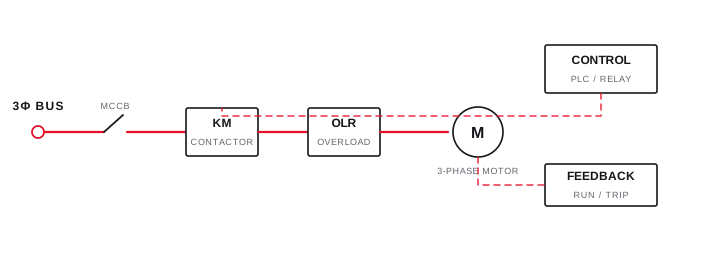
Final ratings, protection, earthing, settings and interlocks follow approved project engineering.
Open full-size SVGDelivery stages
- 01
Requirement and interface review with unresolved questions recorded for closure.
- 02
Control architecture and scope definition against the accepted functional requirement.
- 03
Implementation and integration of the electrical-control elements included in the project.
- 04
Applicable checks, interface verification and handover documentation as agreed.
Scope boundaries
- PLC, SCADA, machine software, site installation and commissioning responsibilities are included only when explicitly stated in the accepted scope.
- No cybersecurity, production-output or uptime guarantee is implied by an automation-integration enquiry.
Frequently asked questions
Can automation integration include an existing control system?
Yes, when the existing architecture, access, signals, software ownership, retained equipment and change responsibilities are understood and accepted as part of the project scope.
What is needed before an automation scope can be defined?
A functional description, sequence, I/O or field-device information, interface list, site constraints and clear ownership of PLC, SCADA, machine and electrical work provide a sound starting point.
Is commissioning automatically included?
No. Factory checks, site commissioning, production trials, travel, shutdown work and third-party coordination must each be identified in the commercial and technical scope.
Need help?
Discuss your automation integration requirement.
Start with the intended outcome, information available and project boundary. The next useful questions can then be made explicit.
Measure before selecting the function
Observed symptoms lead to a defined measurement boundary, an evidence-led function and a verified outcome.

Final ratings, protection, earthing, settings and interlocks follow approved project engineering.
Open full-size SVG