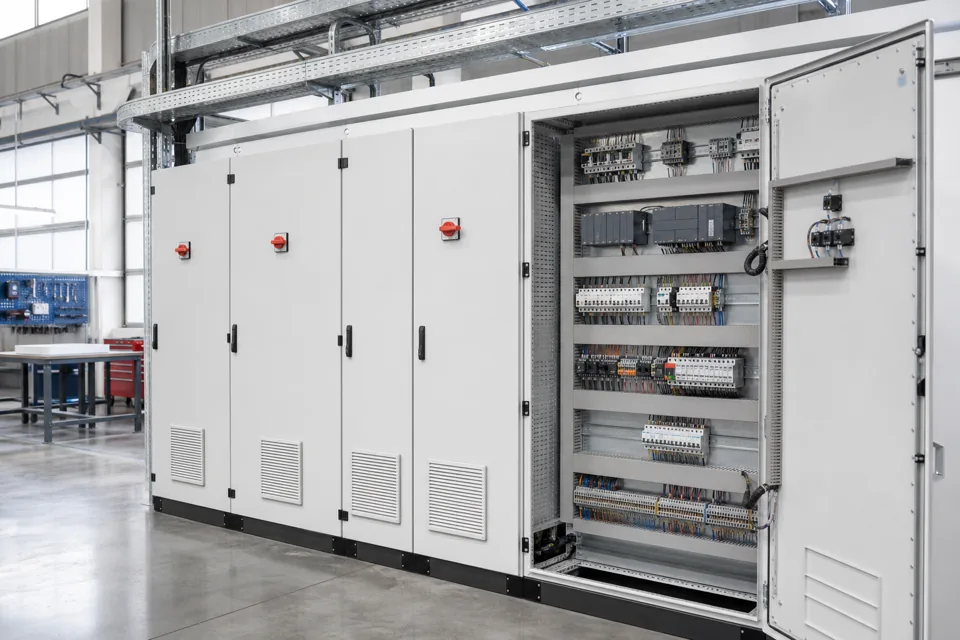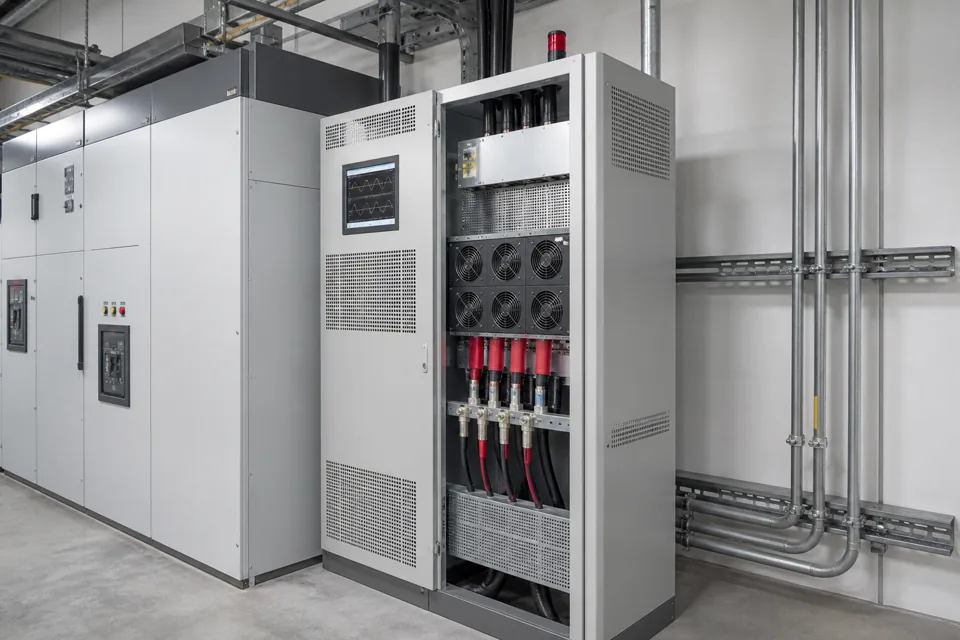

Transformer loading decisions require a time-based load and temperature picture, not a single kVA reading or an assumed percentage of nameplate capacity.
- A peak current snapshot does not describe a transformer thermal duty cycle.
- Ambient, cooling state, harmonics and load duration affect the interpretation of nameplate loading.
- The output should be a bounded operating case, not a universal derating percentage.
Build the transformer and source record
Nameplate, cooling, impedance and installation facts establish what equipment is actually being assessed.
Photograph and transcribe the full nameplate, including rating, voltage ratio, impedance, vector group, cooling designation, insulation information and tap position. Record whether fans, pumps or ventilation form part of the stated capability and whether they were available during measurement.
IEC 60076-7 addresses mineral-oil-immersed transformers within its scope and relates loading to ambient conditions, operating temperature and thermal ageing. Dry-type or manufacturer-specific equipment requires its applicable product information and loading method.
Evidence basis[1] International Electrotechnical Commission[2] International Electrotechnical Commission
Build the transformer and source record
Nameplate, cooling, impedance and installation facts establish what equipment is actually being assessed.
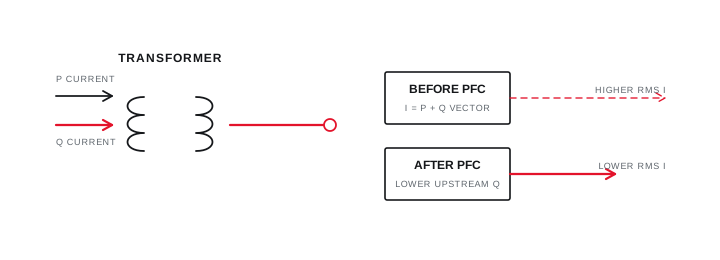
Final ratings, protection, earthing, settings and interlocks follow approved project engineering.
Open full-size SVGAlign load, distortion and temperature in time
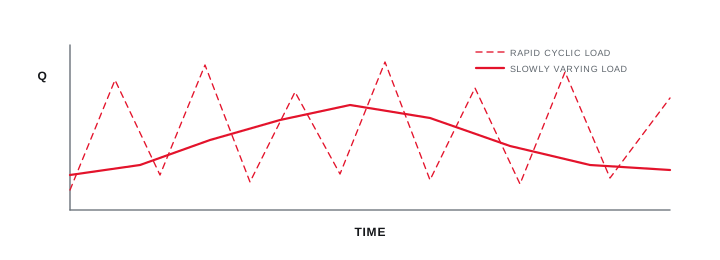
A defensible assessment connects the electrical duty cycle to ambient and thermal response.
Use interval measurements long enough to include normal peaks, low-load periods and repeated production states. Retain per-phase current, power, power factor and voltage, then add harmonic data when nonlinear loads can increase winding or stray losses.
Time-align ambient and available temperature indications. Identify sensor position and uncertainty rather than treating one enclosure or oil-temperature value as a direct winding hot-spot measurement.
Evidence basis[1] International Electrotechnical Commission[2] International Electrotechnical Commission[3] International Electrotechnical Commission
Align load, distortion and temperature in time
A defensible assessment connects the electrical duty cycle to ambient and thermal response.
Final ratings, protection, earthing, settings and interlocks follow approved project engineering.
Open full-size SVGSeparate normal, contingency and growth cases
Different operating objectives require different durations, cooling assumptions and approval boundaries.
Model present normal duty, an agreed contingency such as one source unavailable, and future connected-load growth as separate cases. Record duration, starting events, phase imbalance and the cooling state assumed for each.
Escalate any planned loading above nameplate or any life-consumption estimate to the responsible transformer specialist. The field evidence can define inputs; it does not replace the equipment-specific thermal model.
Evidence basis[1] International Electrotechnical Commission[2] International Electrotechnical Commission[3] International Electrotechnical Commission
| Case | Required evidence | Decision boundary |
|---|---|---|
| Normal duty | Representative interval profile | Continuous operating review |
| Contingency | Duration and unavailable equipment | Approved temporary condition |
| Growth | Load schedule and diversity | Study before commitment |
| Distorted load | Spectrum and load state | Loss and heating review |
Information that makes the next review more useful.
- 01
Capture the complete nameplate, vector group, impedance, cooling designation and tap position.
- 02
Record interval kW, kVAr, current, voltage and phase balance across representative operating cycles.
- 03
Measure ambient and available transformer temperature indicators with time alignment to the load profile.
- 04
Identify nonlinear loads and retain the harmonic spectrum where distortion may affect losses.
- 05
Confirm ventilation, cooling equipment availability, enclosure condition and maintenance state.
- 06
Separate normal, contingency and future-load cases with their permitted duration.
- 07
Route any overload or life-consumption decision through the transformer manufacturer or competent study authority.
Standards and technical references.
Links identify the source and scope; access to a complete standard may require purchase or organisational access.
- 01IEC 60076-7:2018 — Loading guide for mineral-oil-immersed power transformersInternational Electrotechnical Commission
- 02IEC 60364-5-52:2009+AMD1:2024 — Selection and erection of wiring systemsInternational Electrotechnical Commission
- 03IEC 61000-2-4:2024 — Compatibility levels for industrial power-distribution systemsInternational Electrotechnical Commission
Questions engineers and project teams ask.
Can transformer loading be judged from one maximum-demand value?
No. Duration, ambient temperature, cooling state, harmonic content, phase balance and equipment condition affect the thermal interpretation of apparent power.
Does this guide provide a safe transformer overload percentage?
No. Any overload or ageing decision requires equipment-specific data, the applicable loading method and approval from the responsible transformer or system authority.