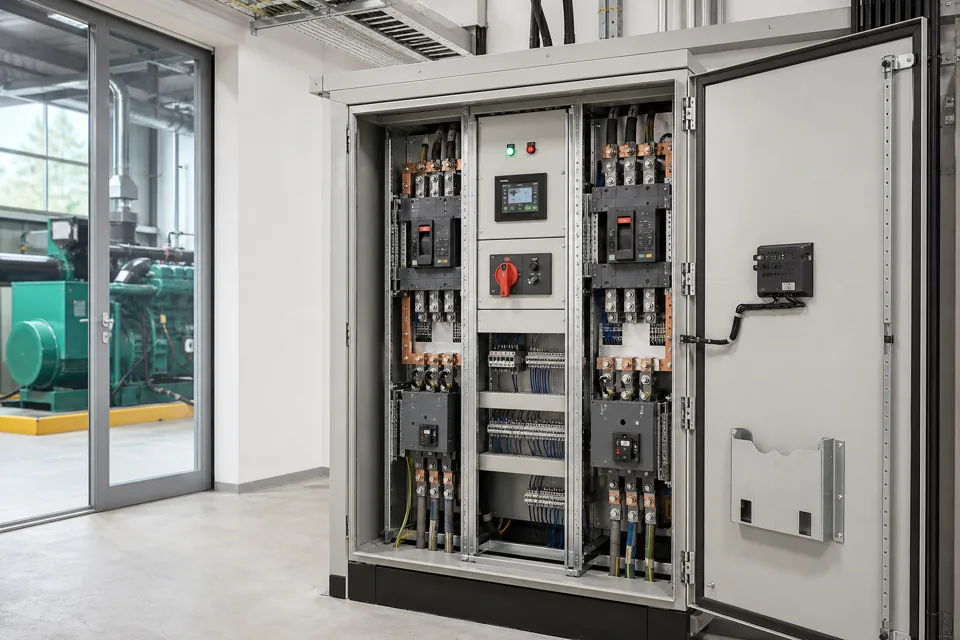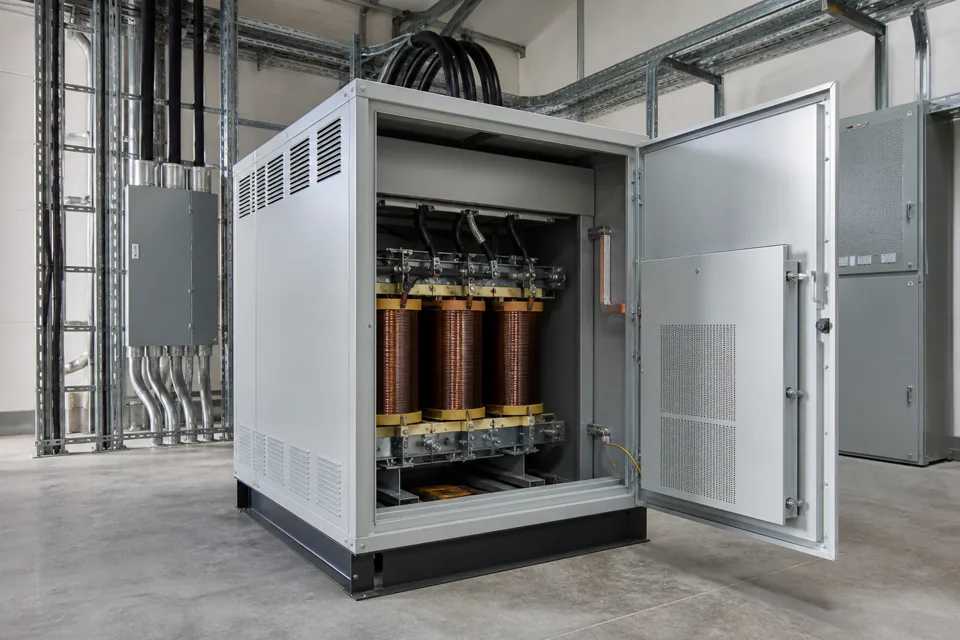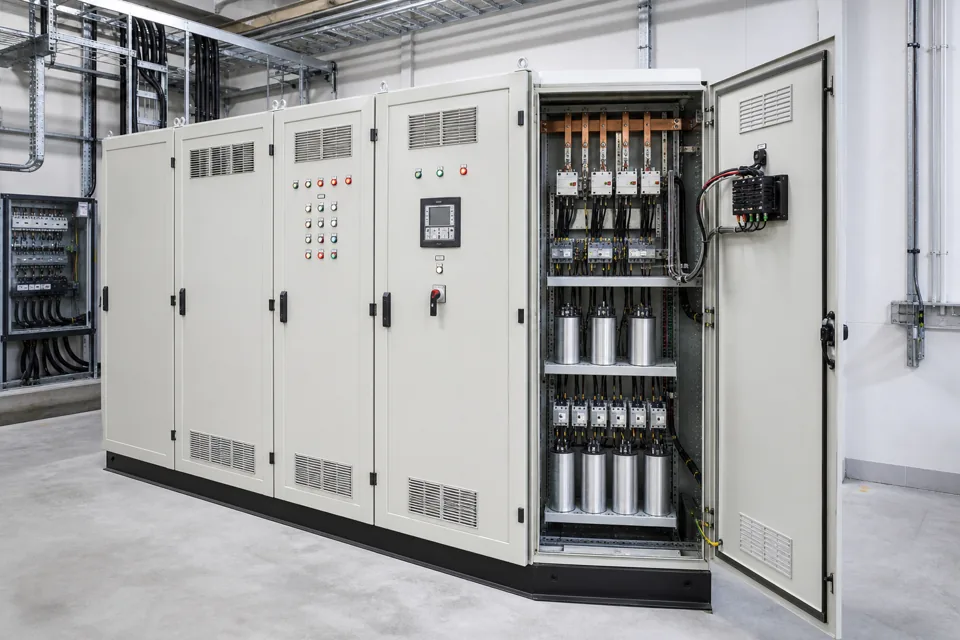

Hospital essential supply architecture begins with clinical function and permitted interruption, then coordinates sources, transfer, distribution, monitoring and verification.
- Clinical function and permitted interruption define the supply objective.
- Source continuity includes transfer, distribution, control power and maintenance states.
- Verification must be planned without creating unmanaged risk to patients or clinical operations.
Classify the medical function and essential loads
Load priority and interruption tolerance should follow clinical risk assessment and medical-location requirements.
Work with authorised clinical and facility stakeholders to identify medical locations, equipment functions and the consequence of supply loss. Separate life-safety, treatment, environmental, diagnostic, communication and support loads according to the project basis.
IEC 60364-7-710 applies to electrical installations in medical locations within its scope and includes verification considerations. Use the applicable local rules and competent design authority for the specific facility.
Evidence basis[1] International Electrotechnical Commission[2] International Electrotechnical Commission
Classify the medical function and essential loads
Load priority and interruption tolerance should follow clinical risk assessment and medical-location requirements.
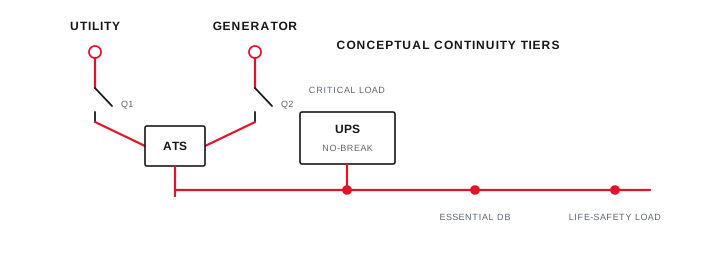
Final ratings, protection, earthing, settings and interlocks follow approved project engineering.
Open full-size SVGCoordinate sources, transfer and load acceptance
Generator, UPS and transfer systems must support the starting and restoration sequence of the defined load groups.
Record source capacity, generator starting and voltage response, UPS autonomy, motor starting duty and the sequence in which loads are accepted. Include a source or equipment unavailable for maintenance, not only the ideal all-equipment-ready state.
Define transfer transition, neutral treatment, interlocks, monitoring and manual fallback. The switching equipment and assembly evidence must align with the final system philosophy.
Evidence basis[1] International Electrotechnical Commission[3] International Electrotechnical Commission[4] International Electrotechnical Commission
Coordinate sources, transfer and load acceptance
Generator, UPS and transfer systems must support the starting and restoration sequence of the defined load groups.
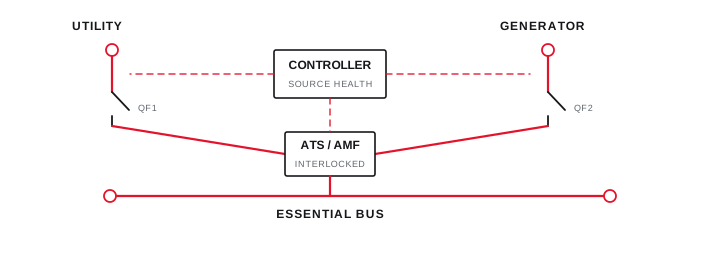
Final ratings, protection, earthing, settings and interlocks follow approved project engineering.
Open full-size SVGVerify continuity without unmanaged clinical risk
Functional evidence requires a coordinated test plan, stakeholder approval and explicit limits on what was witnessed.
Plan inspection, settings checks, source simulations, transfer observations, alarms and periodic verification around clinical operations. Identify loads that need a local test method or cannot be interrupted for a whole-system demonstration.
Retain test conditions, participants, measured timing, exceptions and restoration evidence. A generic emergency-system pass should not imply that every clinical load and failure mode was tested.
Evidence basis[1] International Electrotechnical Commission[2] International Electrotechnical Commission[3] International Electrotechnical Commission[4] International Electrotechnical Commission
| Decision | Primary input | Verification record |
|---|---|---|
| Load priority | Clinical consequence and interruption | Approved load schedule |
| Source capacity | Running and starting duty | Load and source study |
| Transfer sequence | Permitted interruption and interlocks | Cause-and-effect test |
| Maintenance state | Unavailable source or equipment | Contingency procedure |
Information that makes the next review more useful.
- 01
Classify medical locations and clinical functions through the competent project process.
- 02
List each essential load, permitted interruption, starting duty and restoration priority.
- 03
Map normal, alternate and local backup sources with their autonomy and maintenance states.
- 04
Define transfer, neutral, earthing, segregation and control-power philosophy.
- 05
Include generator starting, motor loads, UPS interaction and staged load acceptance.
- 06
Plan alarms, monitoring, periodic verification and controlled functional tests.
- 07
Retain decisions, test evidence, limitations and clinical approvals in the handover set.
Standards and technical references.
Links identify the source and scope; access to a complete standard may require purchase or organisational access.
- 01IEC 60364-7-710:2021 — Low-voltage installations in medical locationsInternational Electrotechnical Commission
- 02IEC 60364-6:2016 — Verification of low-voltage installationsInternational Electrotechnical Commission
- 03IEC 60947-6-1:2026 — Transfer switching equipmentInternational Electrotechnical Commission
- 04IEC 61439-2:2020 — Power switchgear and controlgear assembliesInternational Electrotechnical Commission
Questions engineers and project teams ask.
Can every hospital essential load use the same transfer time?
No. Clinical function, medical-location assessment, equipment behaviour and the consequence of interruption determine the required supply arrangement and verification basis.
Should a hospital backup test interrupt live clinical areas?
Testing must follow an authorised, clinically coordinated plan. Simulation, staged tests or local methods may be required where a live interruption would create unmanaged risk.