
Power Quality
What to Share for APFC Evaluation
An electricity bill can start the discussion, but configuration also depends on when loads operate, how quickly they change and whether harmonics affect capacitor selection.
Share Your Requirement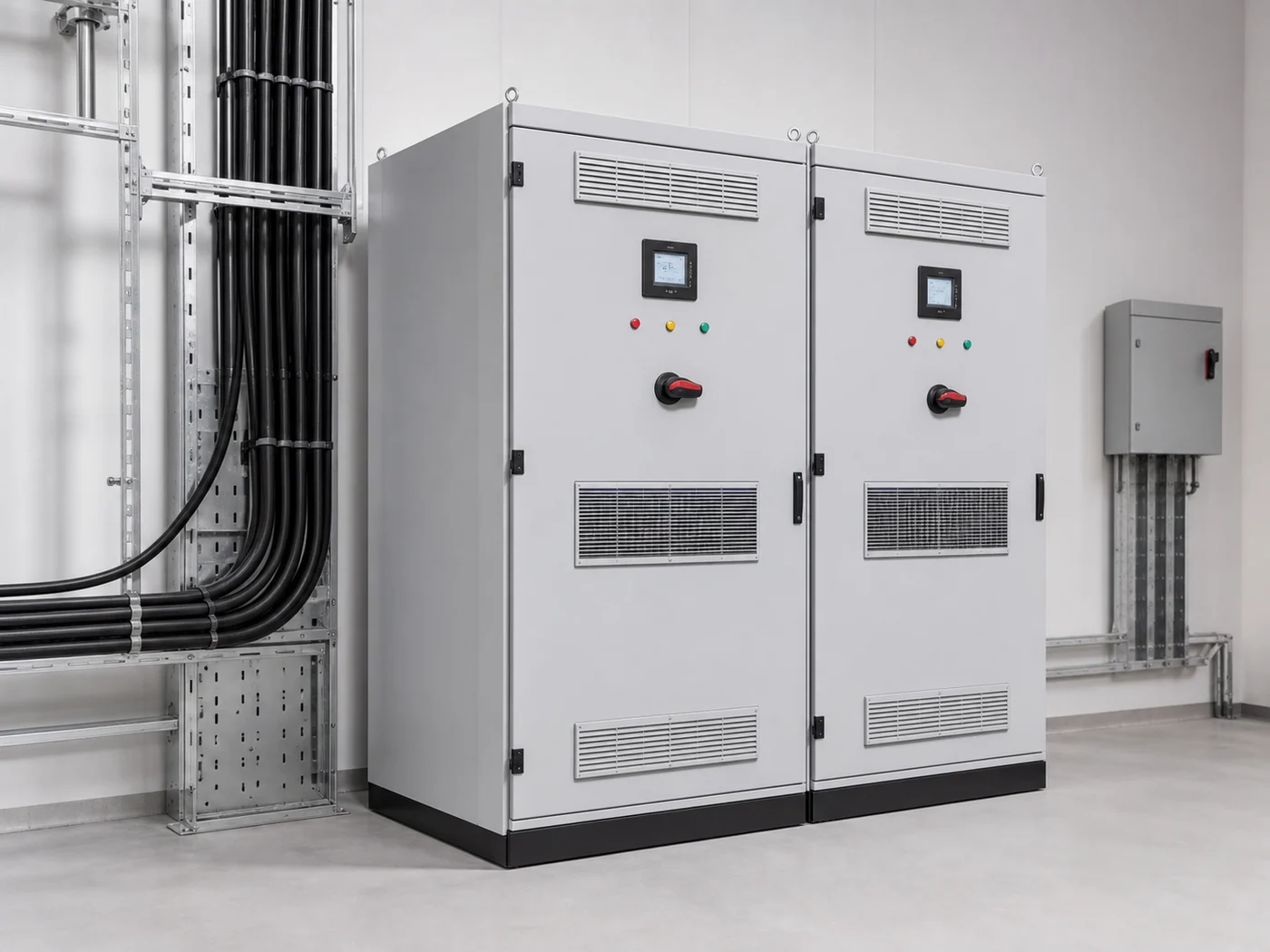
Project information checklist
Mark what is available and note what is still unknown. Do not delay an initial discussion simply because every item is not complete.
- 01
Share recent electricity bills or recorded demand and power-factor information where available.
- 02
Provide the single-line diagram, transformer details, system voltage and frequency.
- 03
List major inductive and non-linear loads with their operating combinations and duty cycles.
- 04
Provide time-based power-factor, kW and kVAr measurements if a study has been completed.
- 05
Include harmonic measurements or identify drives, rectifiers, welders and other electronic loads.
- 06
Record existing capacitor-bank capacity, stage sizes, controller and observed condition.
- 07
Describe installation space, ventilation, temperature, dust and cable-entry constraints.
Frequently asked questions
Is a monthly power-factor value enough for APFC selection?
It may indicate a concern but can hide rapid or shift-based changes. Time-based measurements and the operating load profile usually provide a better basis for step and switching decisions.
Why list non-linear loads in an APFC enquiry?
Drives, rectifiers, welders and other power-electronic loads can influence harmonic conditions and the suitability of conventional, detuned or dynamic correction approaches.
Turn the available information into a useful review.
Describe the required outcome, attach or reference the information you have and identify any immediate project constraint.